Orange-wood paella room · Ciutat Vella, Valencia
The fire starts at thirteen hundred.
Lunch is on the boards · Rabbit & garrofó on the long pan
See today’s menu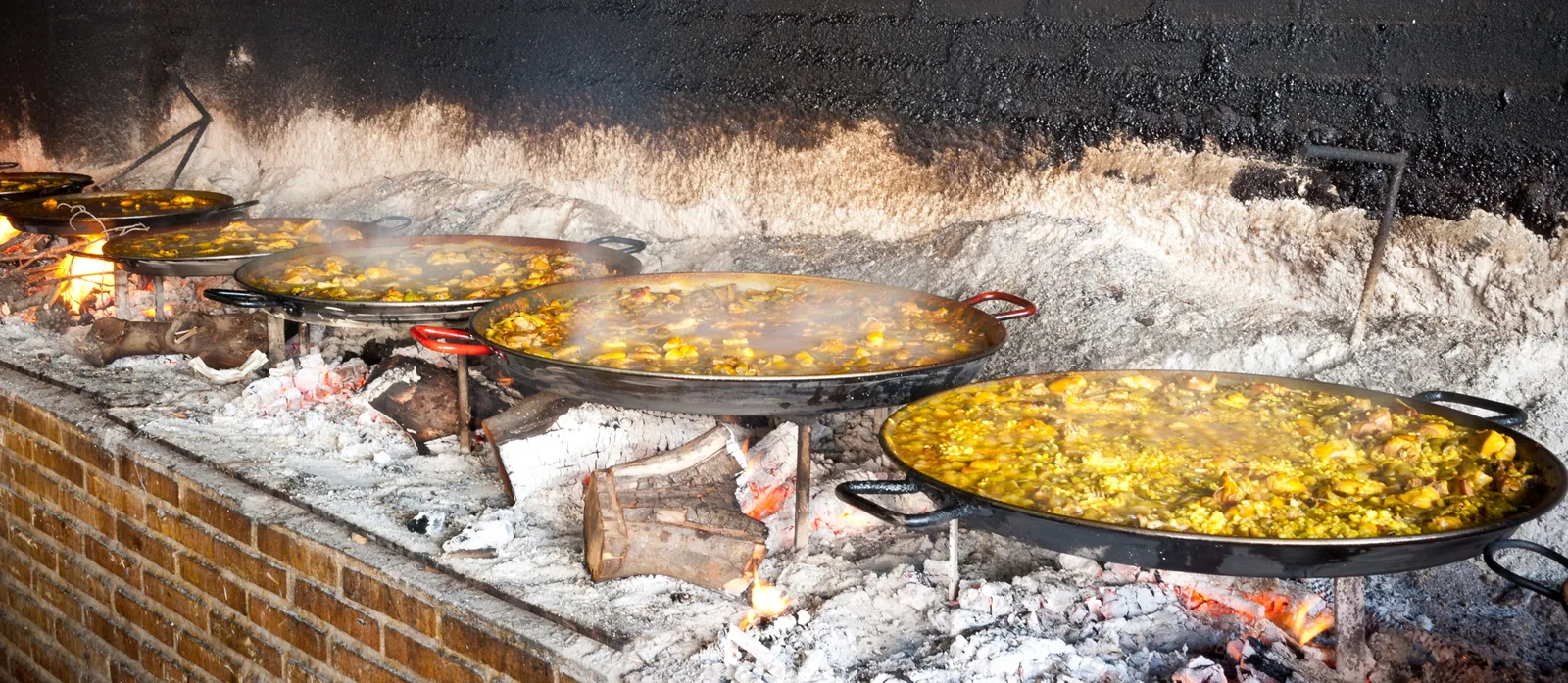
Section two · on the long fire
Today, one pan, written in chalk on the upper board.
There is always one arros del dia that is not on the printed menu. It depends on the morning — the rabbits from the back stalls, the chicken from the butcher on Calle Vinatea, the garrofó the green-grocer had on the crate. It is the dish the kitchen is proud of that day, and it runs out by twenty-two hundred.
We do not list it online. You have to read the chalk on the wall when you walk in, or you have to ask. The dish on the board right now is on the card to the right.
Section three · the fire
Seventeen minutes of fierce flame. Then five off the fire.
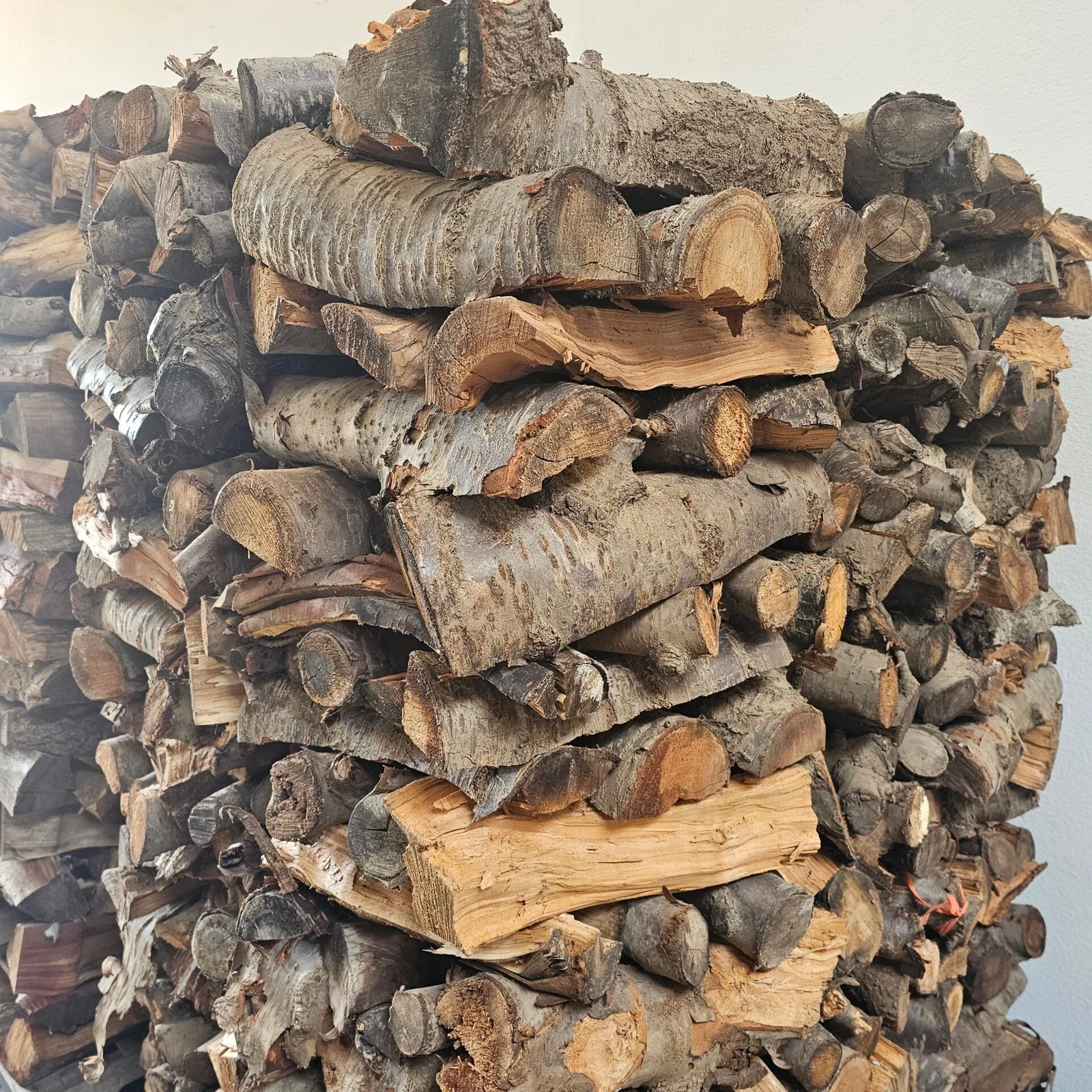
The fire is orange-wood — brought in by the half-trailer from a cutting outside Alzira, stacked under the long bench in the back, and split on Tuesday and Friday afternoons. It lights at twelve-forty, the first lunch pan goes on at thirteen, and the embers are still hot enough for the last coffee at twenty-three-thirty.
The paella takes the rice the way it has to: seventeen minutes of fierce flame — the rice hissing, the stock reducing, the socarrat building under the pan — then five minutes off the fire, covered with a damp cloth, the rice finishing in its own steam. We do not stir after the stock goes in. We do not lift the lid. The only way to know is to listen.
“If you are stirring the rice, you have already lost the rice. Walk away and let the wood do its work.” — Marta, on her second cup of café at ten in the morning
— Marta Vidal, head cook · nineteen years behind the same two pans
17min
on the fire — the rice hissing, the socarrat building
5min
off the fire — covered, the rice finishing in steam
46seats
forty at the tables, six at the barra, never one more
Section three · a long Tuesday
Twelve-forty to twenty-three:30 — the long fire never really stops.
The kitchen runs on the market’s clock, not the city’s. What is on the board at thirteen is whatever the stalls had at seven-thirty; what is left at twenty-two is whatever the fire didn’t claim. The barra wakes before the baker. The last coffee is served after the tourists have given up.
06:00
The bakery on Tiradores lights the oven. The bread for the bocadillos and the bread on every table comes out at seven. We pick it up on the way down.
07:30
Marta crosses the market threshold. She walks the left aisle for garrofó, the back hall for the fish, Calle Vinatea for the rabbit. No list; she has done it long enough.
10:00
The barra opens. Six stools, three bocadillos, café amb gel on the slate. The first regular arrives at ten-04; he has been coming for nine years.
12:40
The first match on the orange-wood. Paper, then kindling, then two logs. The chimney catches at twelve-forty-six; the kitchen smells like Alzira by twelve-forty-eight.
13:00
The first paella hits the long fire. The one on the board. Seventeen minutes of fierce flame and the rice stops being a pile of ingredients and becomes the dish.
15:30
The last menu del día is served. After fifteen-thirty, no more three-course lunch — the kitchen has switched to raciones and the barra is back to bocadillos.
16:00
Door closes. Siesta. The chef has a vermouth at the next bar. The fire is banked, not out — it will pick up in three hours.
20:00
The wood is stoked; the dinner pans go on. The menu is shorter — the arroz del día, two plates, the fideuà if the prawn heads were good.
22:00
The arroz del día runs out. Sometimes earlier, never later. If you are here at twenty-two you eat what the kitchen is proud of that day.
23:30
The last café. The embers are banked. Marta sweeps the pass, counts the till, and walks home through the alleys behind the market. The wood holds its heat until morning.
Sun
The market sleeps, so do we. The wood cools. The kitchen is quiet. The chalkboard is wiped clean for Monday.
Section four · the market
We buy what the market has, and only what the market has.
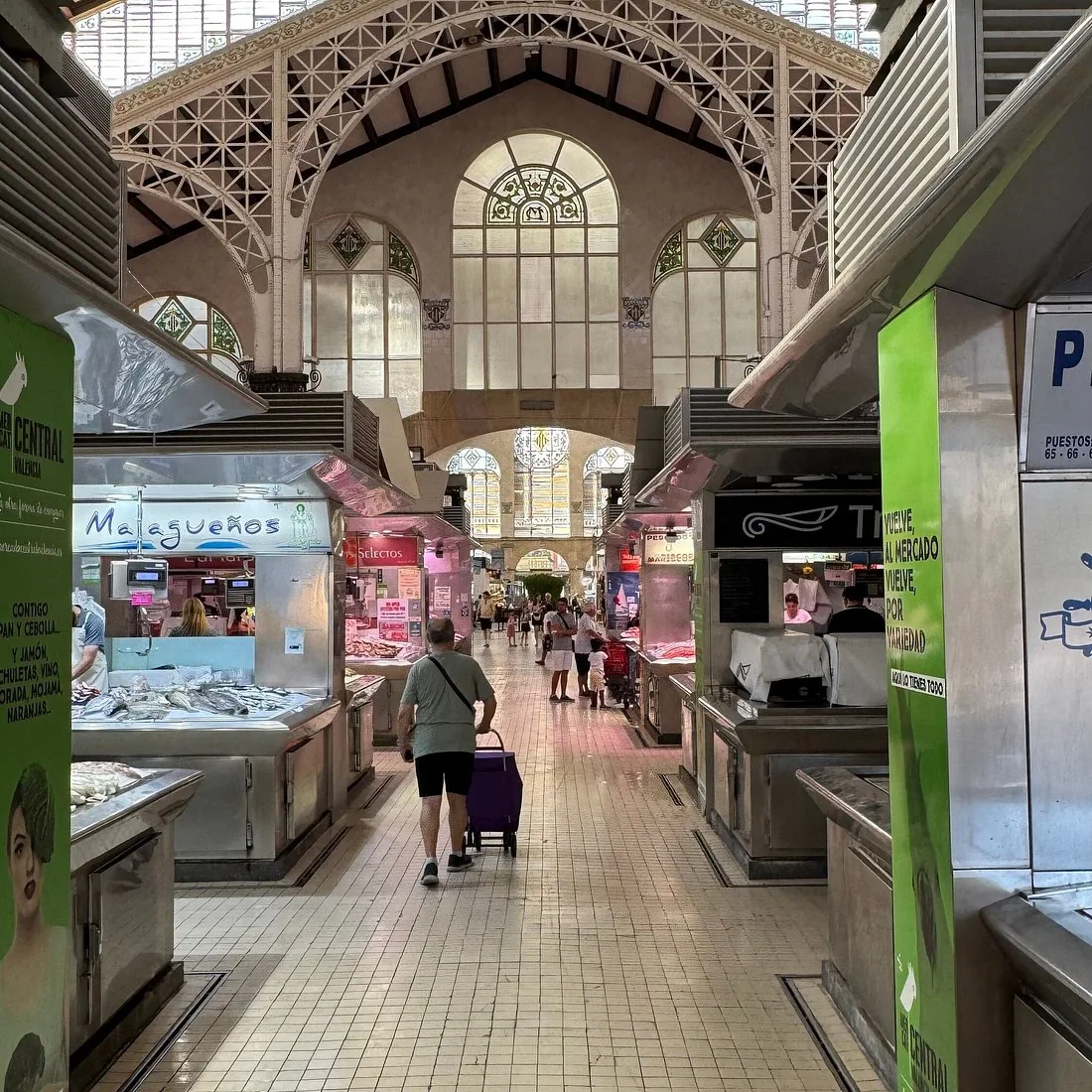
The Mercat Central opens at 07:30 and closes at 15:00, Monday to Saturday. Closed Sunday — which is why we are also closed on Sunday. We are not in the business of storing a Tuesday aubergine until Friday.
Marta does the buying three mornings a week. She knows the green-grocer with the garrofó on the left aisle, the butcher on Calle Vinatea who keeps the whole rabbit, the fishmonger who holds the prawn heads for the fideuà stock. The arros del dia on the board is the answer to what they had on the crate that morning.
- Mon & ThuGreen-grocer round — garrofó, ferraura, ñora, tomato. Aubergine in summer.
- Tue & FriButcher at Vinatea — whole rabbit, free-range chicken, the bones for stock.
- Wed & SatFishmonger at the back of the hall — prawn heads, cuttlefish, whatever the boats had.
- Closed SunThe market sleeps — so do we. The wood cools and the kitchen is quiet.
Section five · the second breakfast
Esmorzareta Valencian thing — a small bread, a beer, a chair in the sun
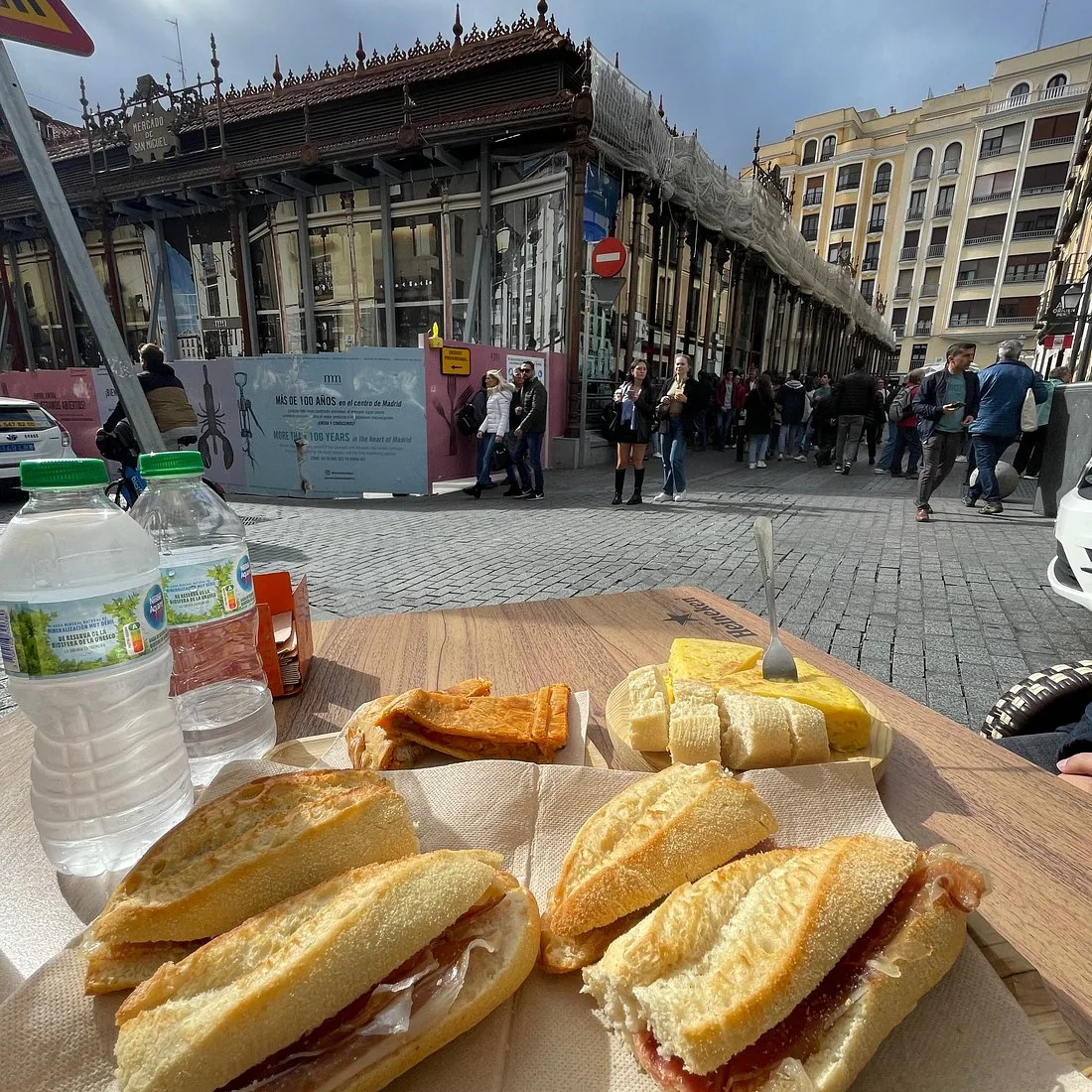
Between ten and noon, the locals file in for the esmorzaret — the second breakfast, taken standing at the barra with a bocadillo in one hand and a small beer (or a café amb gel) in the other. It is not a meal. It is a pause, an excuse, a way of saying good morning to a city that wakes slowly.
We do three bocadillos at the barra — jamón, tortilla, and a cheese with quince — on the bread from the bakery on Calle Tiradores, baked at six. The barra is first-come, first-served. There are six stools, no reservations, and the bocadillo costs €6.50 with the drink.
10:00–12:00 · barra only · walk in
Section six · find the room
Carrer de la Creu, 4 — behind the Mercat Central.
Hours
- Mondayclosed
- Tuesday13:00–16:00 · 20:00–23:30
- Wednesdayclosed
- Thursday13:00–16:00 · 20:00–23:30
- Friday13:00–16:00 · 20:00–23:30
- Saturday13:00–16:00 · 20:00–23:30
- Sundayclosed
Esmorzaret (barra only) from 10:00 till 12:00, Tuesday / Thursday / Friday / Saturday.
Address
Carrer de la Creu, 4
Ciutat Vella, 46003 València
Behind the Mercat Central, off the Plaza de la Ciutat de Bruges — the door is under the green awning, no sign, just the orange-wood smell.
Six minutes’ walk from the Col·legi del Patriarca; two from the Lonja de la Seda.
A demo, by Yonderwell
Like what you see? Write to us — we’ll build one for your place.
The barra is for walk-ins only — six stools, first come, first served, no holds, no calls.
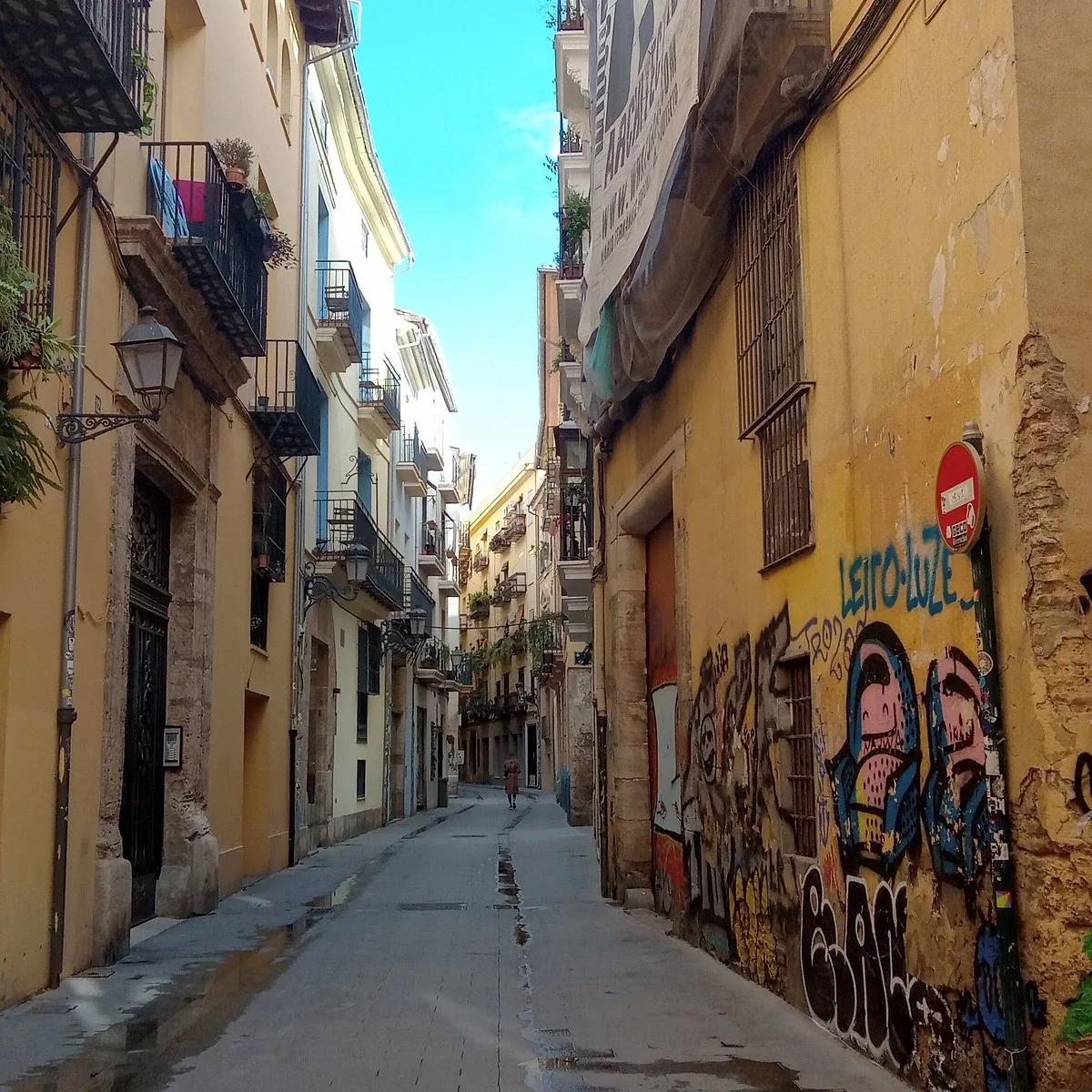
How to find the door
The Mercat Central fills the block. You want the back of it, on the lane that runs behind the fish stalls.
- 01Out of the Mercat Central, take the side exit on the Plaça de la Ciutat de Bruges side.
- 02Turn left down Carrer de la Creu — the lime-yellow alley with the balconies.
- 03Number 4 is at the third street lamp — the green awning, the door ajar from 12:40.
- 04Walk in. Read the chalk on the wall. Pick a table or a stool at the barra.