✳ Croix-Rousse, Lyon · la colline qui travaille
Four reasons to climb the hill — and stay past the cup.
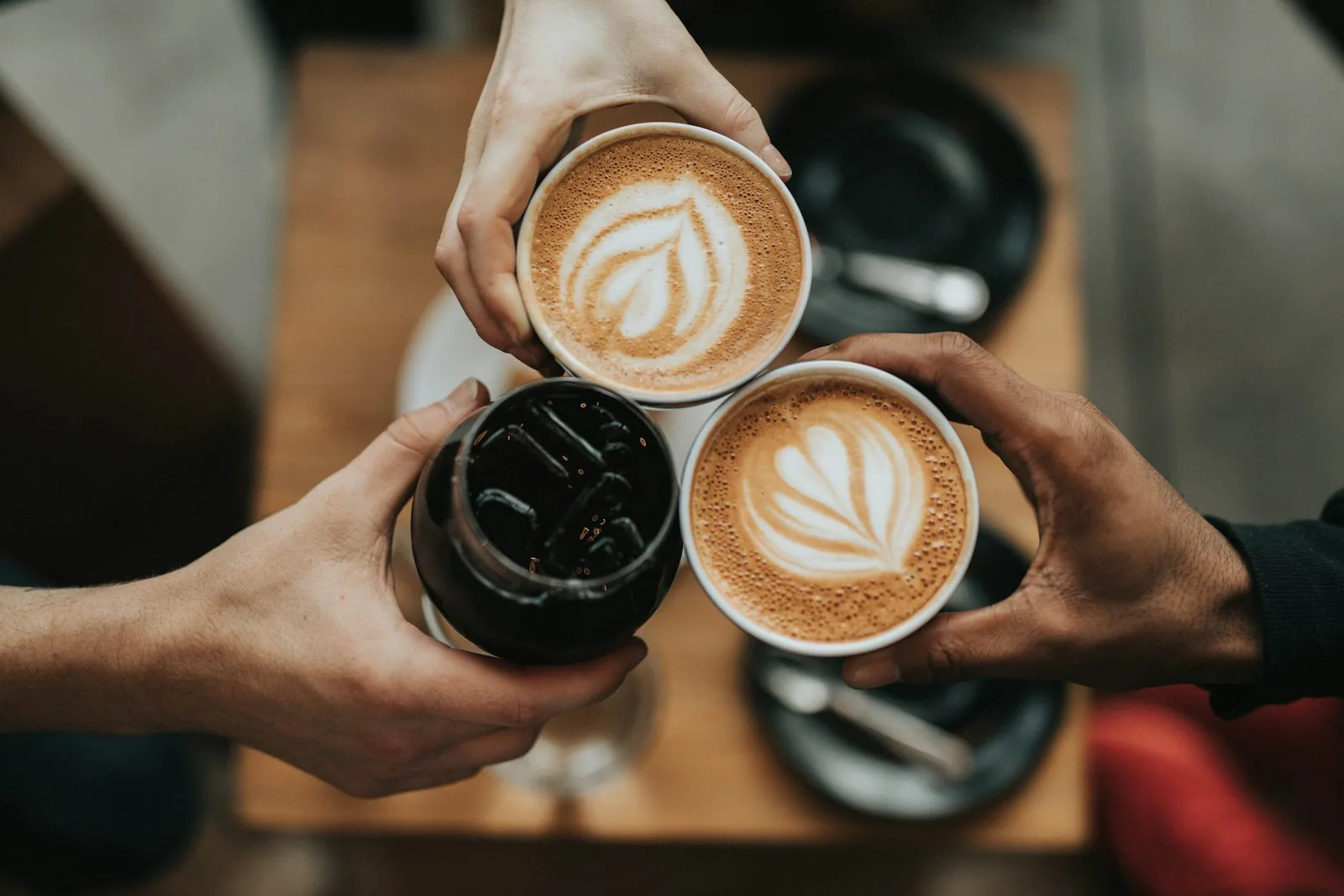
A 40-square-metre coffee room at the corner where the silk workers used to live. The roaster is on in the back, the gold leaf is on the window, the traboules are two streets over. Léa has been opening the door at seven-thirty for seven years.
Act one · the morning roast
We roast at the back before the city is awake.
The Léon 5kg is hot by six-fifty. Léa turns the gas by hand, listens to the first crack, kills it before the second. By seven-fifteen the green smell of new coffee is louder than the bread van on rue Imbert Colomès.
The espresso machine is the only Italian thing in the room — a two-group Faema from 1978, brought up from Marseille in a borrowed van. The grinder is on a quiet transformer so the cups do not shake when the métro passes underneath. That is the kind of detail that nobody sees and everybody drinks.
Coffee prices, for the record, are real Lyon prices: espresso €2.30, noisette €2.80, the croissant that came up from the baker on rue d'Austerlitz this morning is €1.60. We do not write tourist prices on the board.
-
Mon lot
Ethiopia · Yirgacheffe Konga
bergamot · white peach · honey finish light -
House
Brazil · Sul de Minas · Fazenda Santa Inês
milk chocolate · hazelnut · brown sugar medium -
Espresso
Blend · Brazil 60% · Colombia 30% · Ethiopia 10%
for the Faema, two-group, no SOE snobbery med–dark -
Decaf
Colombia · sugarcane process · La Esperanza
brown sugar, plum, no chemical aftertaste medium
Cupping note · Tuesday
“The Yirg opens up only if you let it cool to fifty-two. Drink it hot and you only get the acidity; let it sit and the peach comes in, then the honey, then the bergamot again. It is the same cup four times.”
— Léa Perrin, on her second cup, 8h04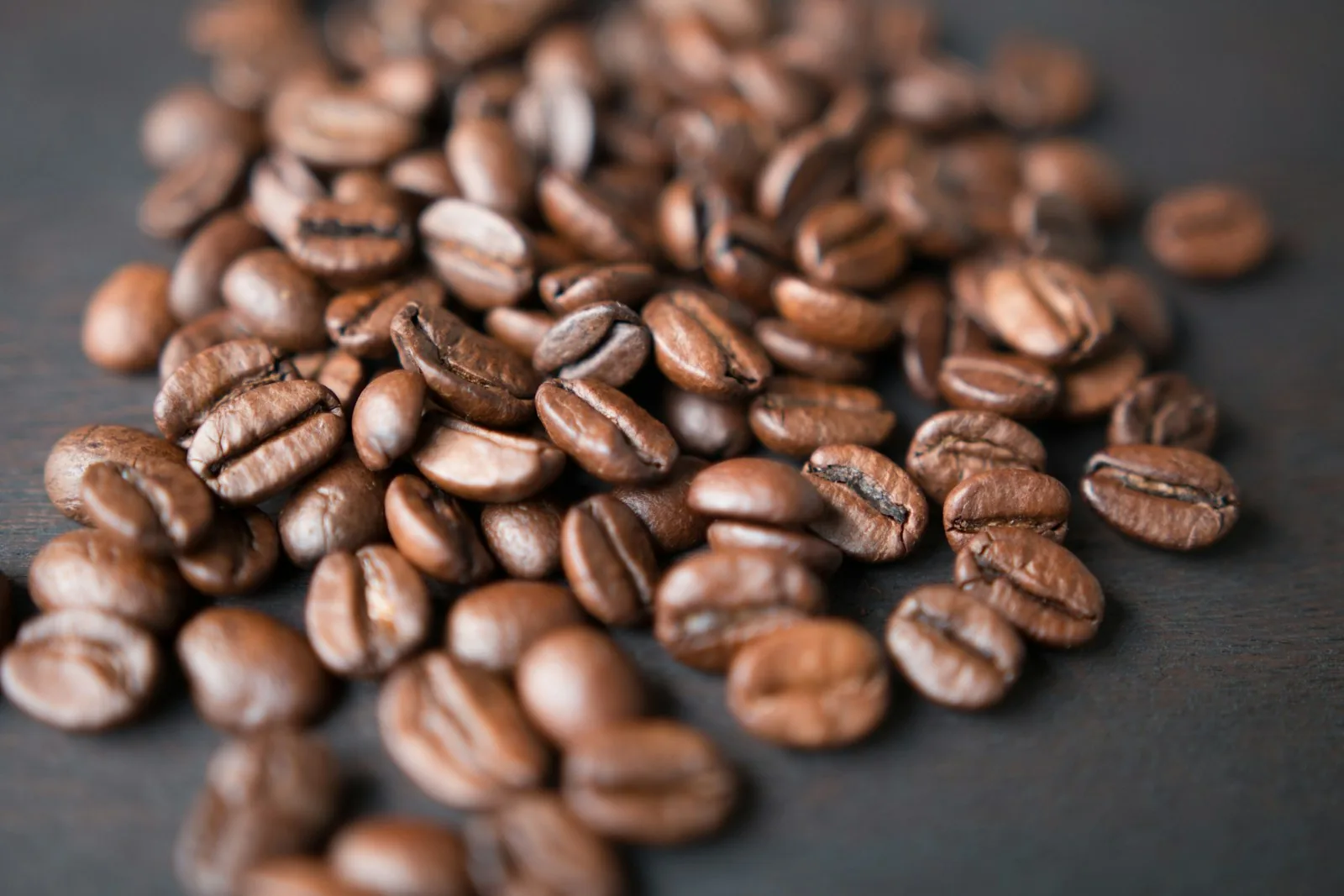
Act two · the worker's lunch
The mâchon — what the silk workers ate at four in the morning, now served at noon.
A mâchon is what a canut used to eat before the loom, in the dark, with a glass of Beaujolais — heavy, salty, enough to last a twelve-hour shift. We serve it from twelve to half past two. It is the most Lyon plate on the menu and we do not apologise for it.
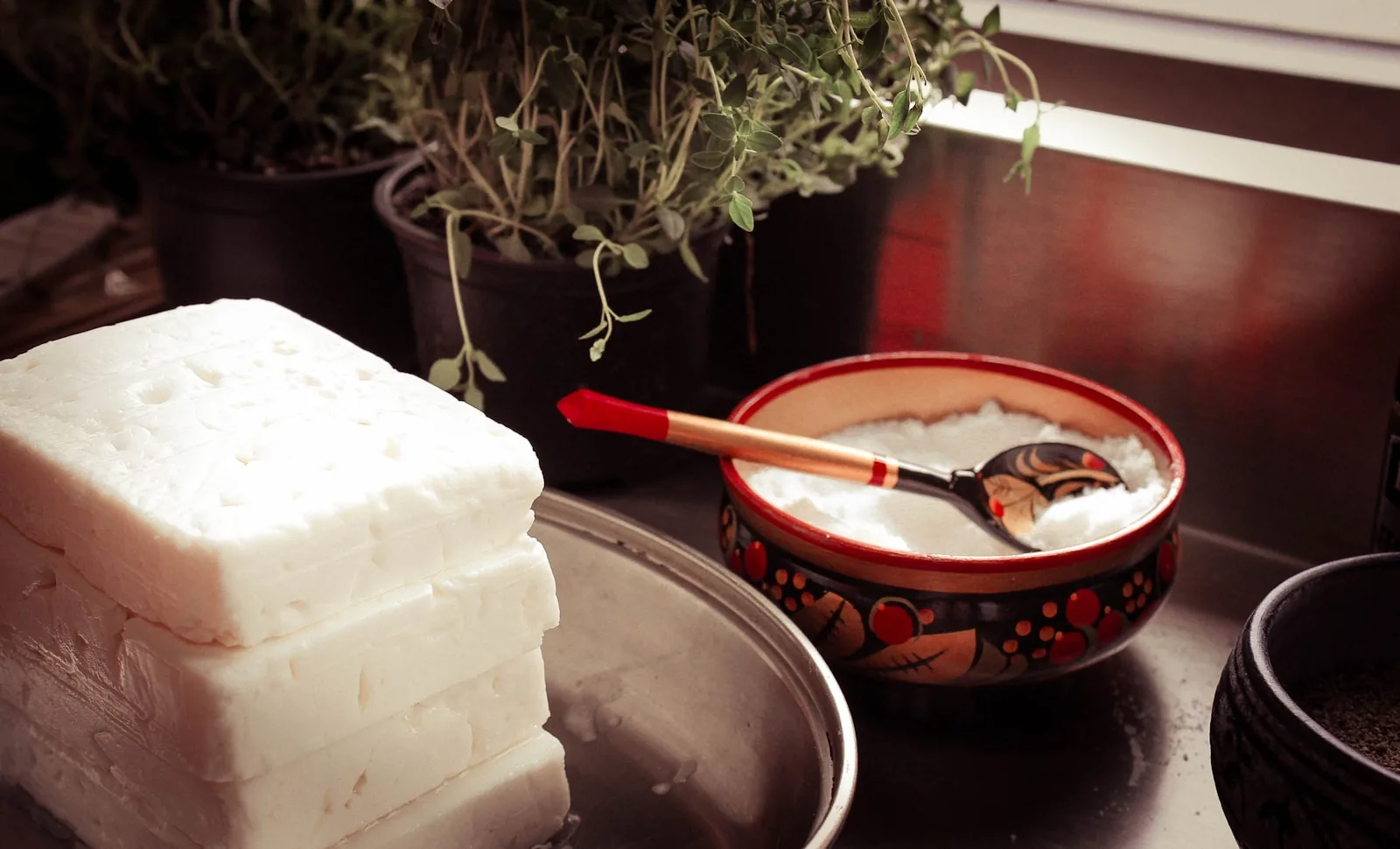
Cervelle de canut — literally silk-worker's brain, a joke, the canuts had nothing — is a bowl of fromage blanc loosened with olive oil, smashed garlic, chives, a fist of parsley, salt, pepper. Cold. Eaten with bread. With a glass of red it is a meal.
The name
Cervelle de canut is a Lyon joke, not a recipe. In the 1831 revolt the canuts — the silk workers of the Croix-Rousse — marched on the Préfecture for a living wage. They were, the newspapers wrote, good for nothing but cheese-and-herbs. The dish that has been called brain of the silk worker ever since is just that: a bowl of fresh cheese and herbs. The canuts would have laughed at it. We still do.
It is also a test of the kitchen. If the garlic is raw, if the chives are wilty, if the fromage blanc is watery, the dish falls apart. There is nowhere to hide.
Act three · five o'clock
At five, the zinc lights up and the pot lyonnais comes out.
The sun drops behind Fourvière and the hill goes purple, and the regulars walk in without knocking. The window seats are taken by seventeen-oh-five. We pour the wine into a pot lyonnais — the 46-centilitre thick glass you only see in Lyon bouchons, the shape that holds the smell of the wine inside.
Order a plateau and the cheese comes from Mons, the saucisson comes from the boucherie across the square, the baguette comes up from the same baker who makes the morning croissant. The whole hill ends up on the board, by seventeen-thirty.
The five o'clock regulars are not in a hurry. They sit at the window, the pot lyonnais between their hands, and watch the hill go down. We do not bring the bill before they put their coat on. — Léa, on the quietest rule of the room
Act four · Sunday brunch
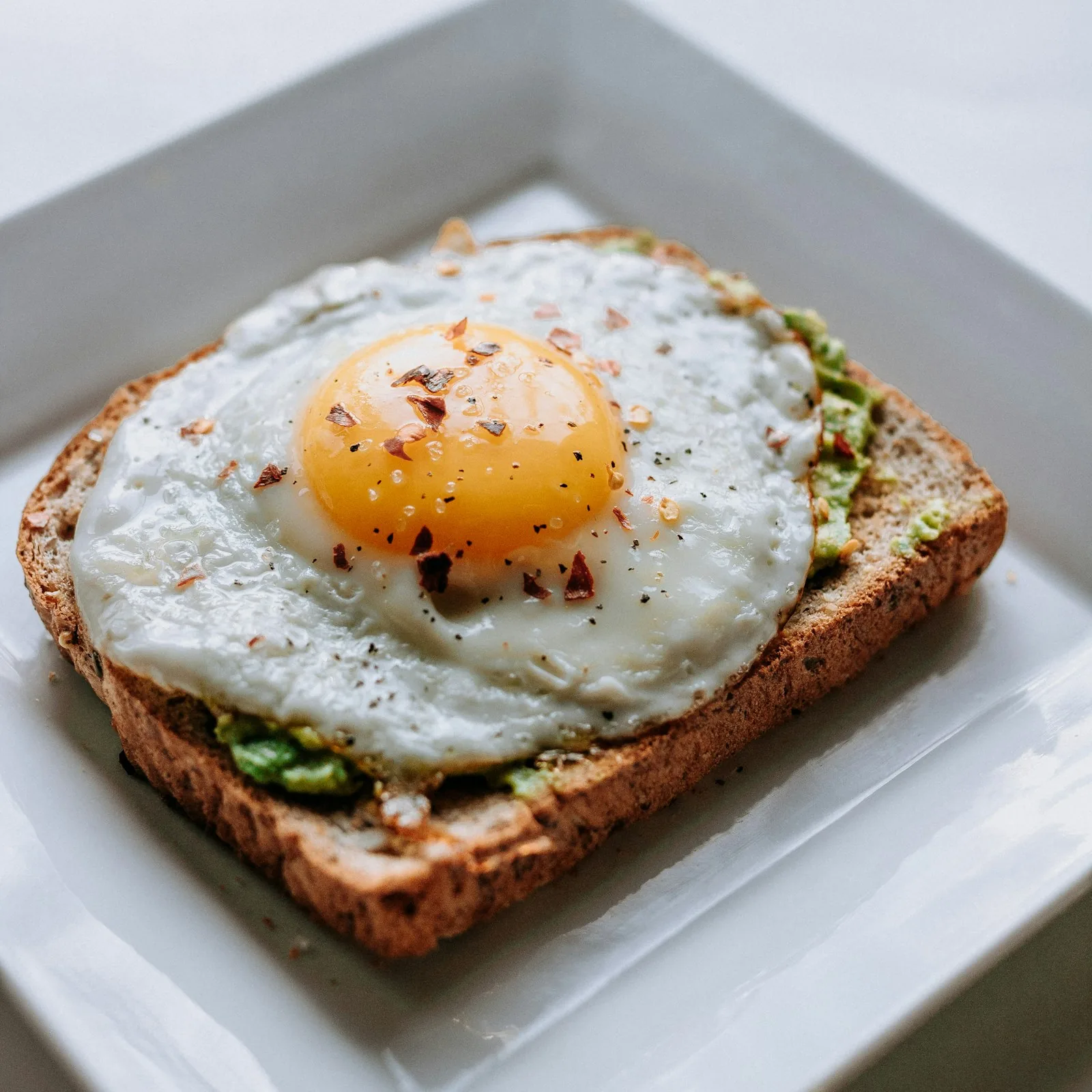
One long table in the traboule courtyard — if the sun is there.
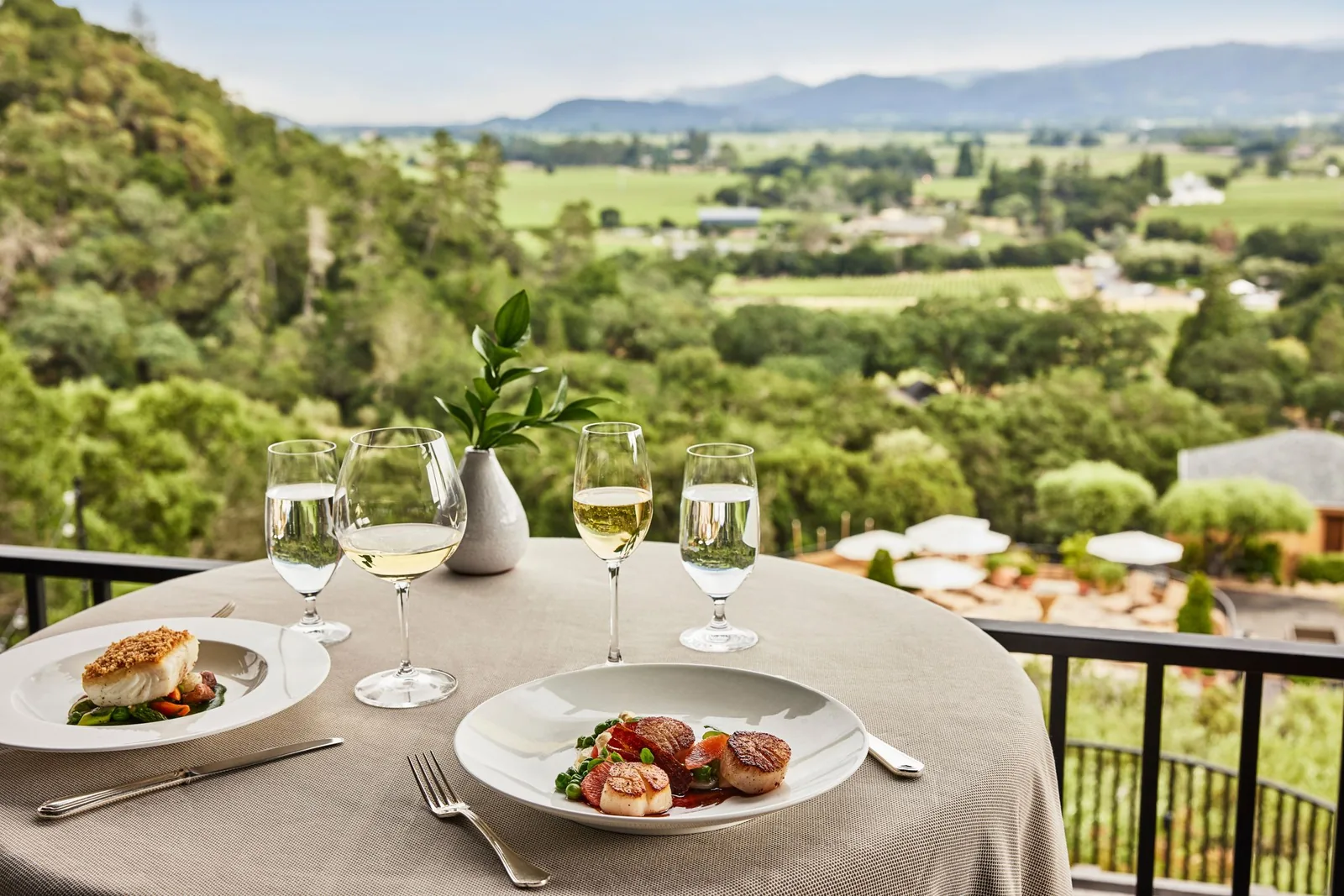
On Sundays the regular room is closed. We move ten metres up the street, through a wooden door that is not the front door, into the courtyard of an old traboule — one of those Renaissance passages that go through a building and come out the other side, the silk workers used them to carry the bolts without getting the silk wet.
There is one long table, twelve seats, an oak tree, and a strip of sky. If it rains we put the table back inside and pretend that was the plan. Either way there is €28 of brunch and a glass of crémant and the whole Sunday to go.
The hill · la colline qui travaille
We are on the hill that works — the one the silk workers built.
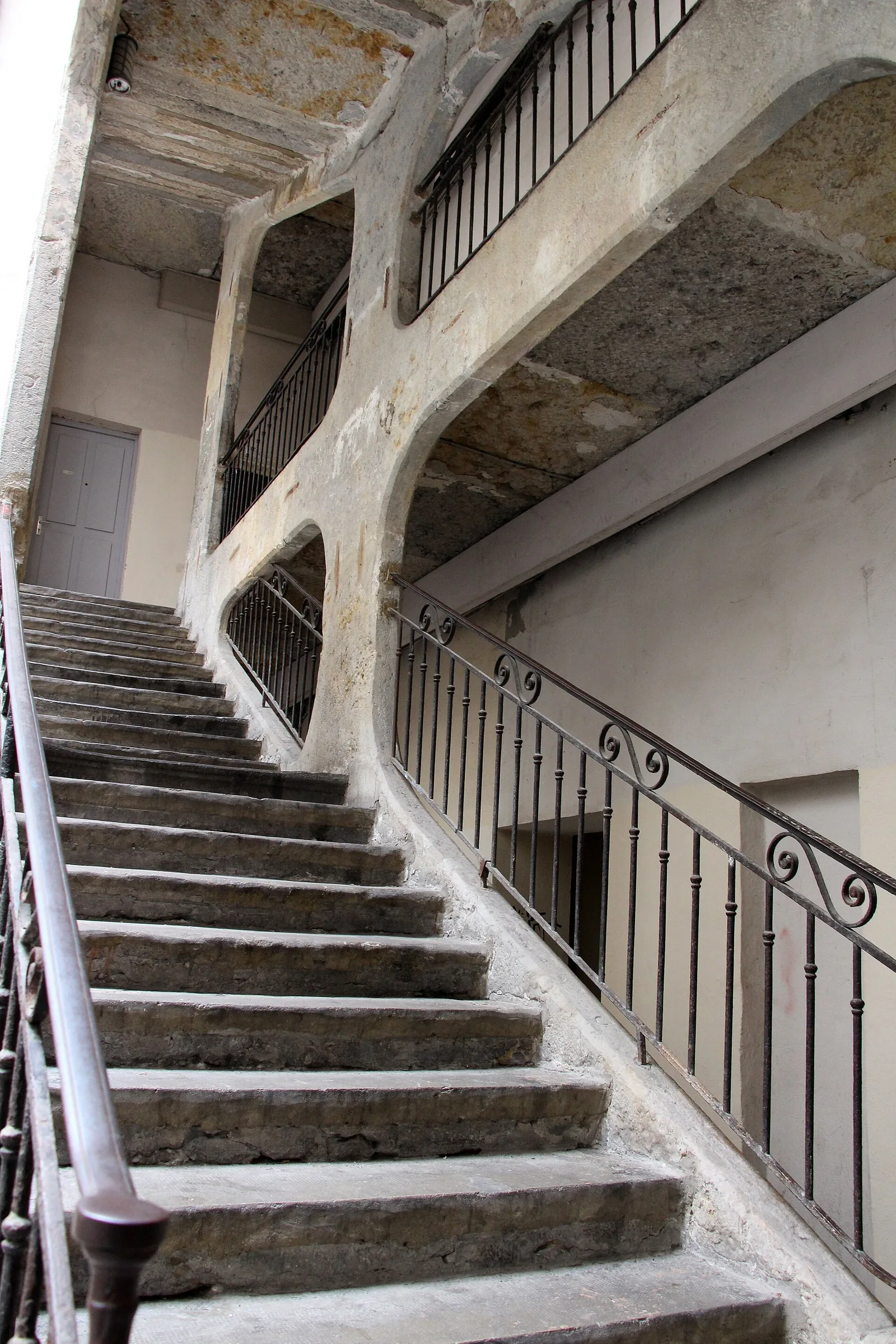
The Croix-Rousse is the older Lyon, the one above the river, the one where the looms were. The buildings are tall because the ceilings had to fit the Jacquard machines. The streets climb because the silk dried better that way. We are one block from the boulevard and three from a traboule that opens onto a courtyard nobody has put a sign on.
-
One · the canuts
The hill that worked
In the nineteenth century the Croix-Rousse was the silk capital of Europe. Forty thousand canuts — silk workers, the word means “those who cannot read” — ran forty thousand Jacquard looms in rooms with ceilings four metres tall, the only kind of ceiling that would fit the machines. In November 1831 they marched on the Préfecture demanding a living wage — le dévênement des canuts, the first workers' revolt in France. They lost. They got a statue.
Our room is forty square metres. It used to be a canut's workshop — the ceiling is the giveaway.
-
Two · the market
Tuesday to Sunday morning
The Marché de la Croix-Rousse runs along the boulevard de la Croix-Rousse, six minutes from us on foot. Tuesday through Sunday, seven until thirteen. We buy our cervelle-de-canut cheese from Mons at the dairy stall, our saucisson from Sibilia across the square, our fruit and herbs from the Auvergne farmer who has the corner pitch.
If the market is closed, our menu is shorter. It is not worth importing a Saturday tomato on a Monday.
-
Three · the traboules
Passages through the buildings
A traboule is a covered passage that goes through a Renaissance building and out the other side, the way the silk workers used to carry the bolts of fabric from the looms on the hill to the brokers by the river without getting the silk wet. There are more than three hundred in Lyon. Some are open, some are locked behind wooden doors with brass numbers. The one next to us, 12, rue des Tables Claudiennes, opens onto a courtyard with an oak tree. That is where the Sunday brunch is.
Section six · find the room
14, rue des Tables Claudiennes — Croix-Rousse, Lyon 1er
Hours
- Mondayclosed
- Tuesday7h30–19h00
- Wednesday7h30–19h00
- Thursday7h30–19h00
- Friday7h30–19h00
- Saturday7h30–19h00
- Sundaybrunch 10h00–14h00
Kitchen closes at 14h30 (mâchon) and at 18h45 (apéro). Sunday is brunch only — no other service.
Address
14, rue des Tables Claudiennes
69001 Lyon · Croix-Rousse
One block up from the boulevard, opposite the traboule with the brass 12. The gold-leaf window is on the corner — door on the side, no sign bigger than a hand.
Métro C — Croix-Rousse station, four minutes uphill on foot. Bus C13, stop Tables Claudiennes.
A demo, by Yonderwell
Like what you see? Write to us — we’ll build one for your place.
No phone — the kitchen is too small and the morning is too loud. Walk in any other time.